Address
304 North Cardinal
St. Dorchester Center, MA 02124
Work Hours
Monday to Friday: 7AM - 7PM
Weekend: 10AM - 5PM
Address
304 North Cardinal
St. Dorchester Center, MA 02124
Work Hours
Monday to Friday: 7AM - 7PM
Weekend: 10AM - 5PM
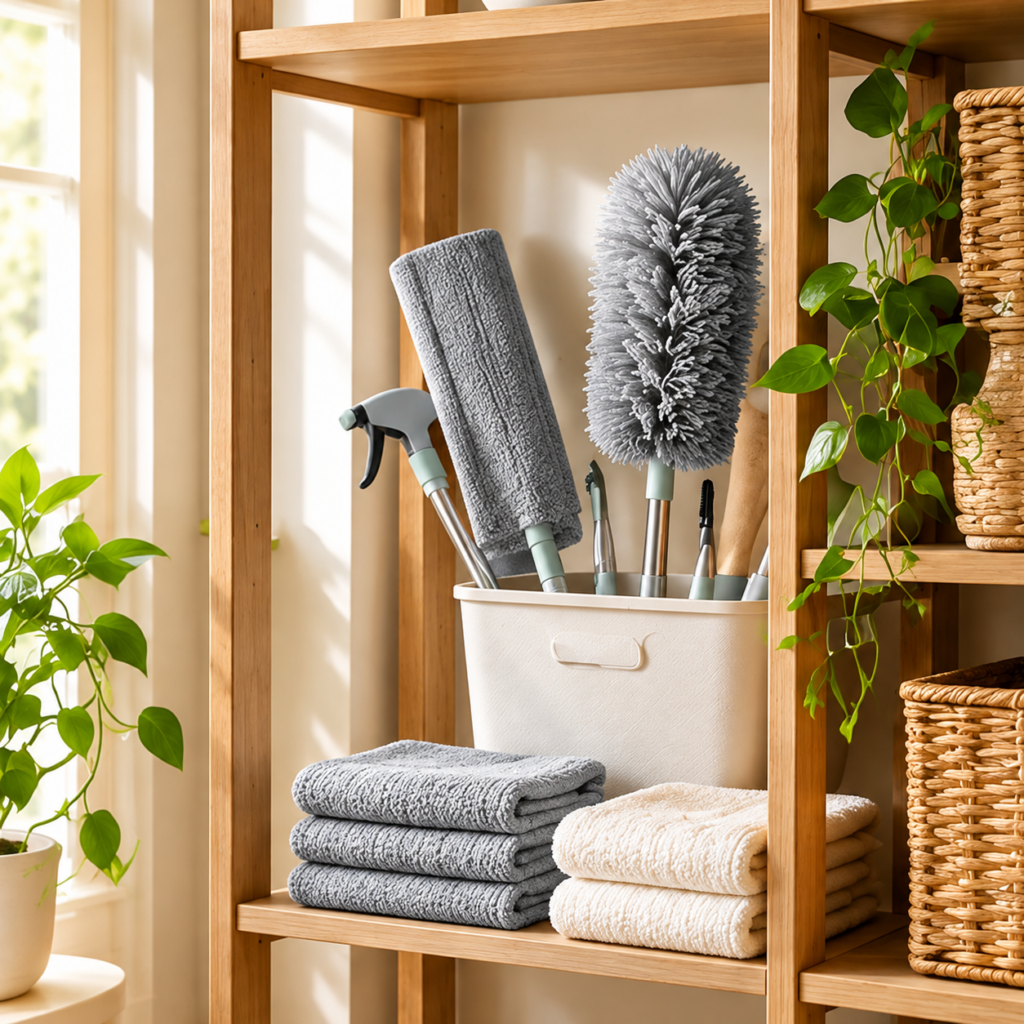
Household cleaning tools are part of many everyday home care routines. From dusting furniture and shelves to reaching ceiling corners and spaces beneath beds, having suitable tools available can make regular household maintenance more convenient.
Just like other household accessories, dusters and cleaning tools benefit from proper handling, maintenance, and storage.
In this guide, we’ll explore simple ways to care for different types of dusters, maintain their components, and keep your cleaning tools organized between uses.
Dusting tools regularly come into contact with loose dust, lint, hair, and other household debris.
Over time, these materials can accumulate on cleaning heads and around handle connections.
Checking and maintaining your cleaning accessories after use can help you identify wear, remove collected debris, and keep your tools ready for the next cleaning session.
Different products may require different care methods depending on their materials and construction.
Always review the manufacturer’s instructions before washing, disassembling, or storing a cleaning tool.
After finishing a dusting task, inspect the cleaning head for visible dust and debris.
For suitable fiber or feather dusters, gently shake the cleaning head in an appropriate area to release loose particles.
Avoid pulling or twisting individual fibers or feathers, as excessive force may damage the cleaning head.
If the head contains larger pieces of debris, remove them carefully according to the product’s care instructions.
Regularly checking the dusting surface is a simple way to maintain your cleaning accessories.
Not all dusting heads are designed to be cleaned in the same way.
Some synthetic fiber heads may be washable, while disposable dusting attachments and certain feather products may require different care.
Before washing, consider:
Do not assume a dusting head is machine washable simply because it has a soft fabric or fiber surface.
Avoid using cleaning chemicals or washing methods that are not recommended for the specific product.
If washing is permitted, follow the manufacturer’s instructions and allow the cleaning head to dry completely before storage.
Telescopic dusters often feature metal poles with adjustable sections.
These handles provide different reach options for cleaning shelves, cabinets, and other accessible elevated surfaces.
To maintain an extendable handle:
If the handle becomes difficult to extend or retract, consult the product instructions rather than applying excessive force.
Flexible dusters are useful for reaching accessible spaces beneath furniture and around narrow areas.
Their bendable construction allows the cleaning head to be positioned for different household tasks.
When caring for a flexible duster, avoid repeated sharp bending beyond the limits specified by the manufacturer.
After cleaning, inspect the head and connecting components for visible wear.
If the product includes a removable fiber cover, follow its specific care instructions before cleaning or replacing it.
Store the flexible head in a position that does not place unnecessary pressure on its structure.
Feather dusters feature soft, layered feather heads that move around furniture edges and decorative surfaces.
Because feathers can be delicate, they should be handled with care.
After use, gently remove loose dust according to the manufacturer’s recommendations.
Avoid:
When possible, store feather dusters where their heads are not compressed by other cleaning accessories.
A designated storage area can help keep household cleaning tools organized.
Depending on the product’s design, dusters may be stored in a utility closet, cleaning cabinet, or other suitable indoor storage space.
Consider these storage practices:
Keeping cleaning tools organized can also make it easier to find the appropriate accessory for your next cleaning task.
Before using a household duster, take a moment to inspect its condition.
Look for:
If a tool is damaged, discontinue use until the issue has been addressed according to the manufacturer’s instructions.
Do not continue using a cleaning accessory if its components are loose or cannot be secured properly.
If you use several types of dusters, organizing them by their intended use may help simplify your household cleaning routine.
For example:
Long-Handle Dusters
Store these in a location where extended poles and cleaning heads can be kept without excessive pressure.
Fiber Dusters
Keep the dusting heads clean and dry, following the applicable care instructions.
Feather Dusters
Store carefully to avoid compressing or damaging the feathers.
Flexible Dusters
Avoid placing heavy items on bendable cleaning heads during storage.
Keeping different tools together in a designated household cleaning area can make everyday maintenance more convenient.
Some dusting products include replaceable heads, while others are designed as complete cleaning tools.
Replacement needs depend on the product’s construction, condition, and instructions.
You may need to review the condition of a cleaning head if you notice:
When replacing an attachment, check its compatibility with your existing handle.
Do not assume that dusting heads from different products use the same connection system.
At SHIMMERANDSCRUB, operated by Shimmer & Scrub LLC, we focus on practical dusting tools and household cleaning accessories for everyday home care.
Our product selection includes long-handle dusters, extendable fiber dusters, feather dusters, and flexible cleaning tools for different household surfaces and spaces.
We aim to provide useful product information, including available dimensions, materials, handle designs, package contents, and care notes, to help customers choose cleaning accessories for their regular routines.
Whether you are looking for a long-handle duster or a flexible tool for accessible spaces beneath furniture, explore our product selection to find an option that suits your needs.
Taking care of household cleaning tools does not need to be complicated.
Removing loose debris, following product-specific cleaning instructions, inspecting components, and choosing an appropriate storage location are practical habits that can become part of your routine.
By understanding the care requirements of different dusting tools, you can keep your cleaning accessories organized and ready for regular household use.
— The SHIMMERANDSCRUB Team